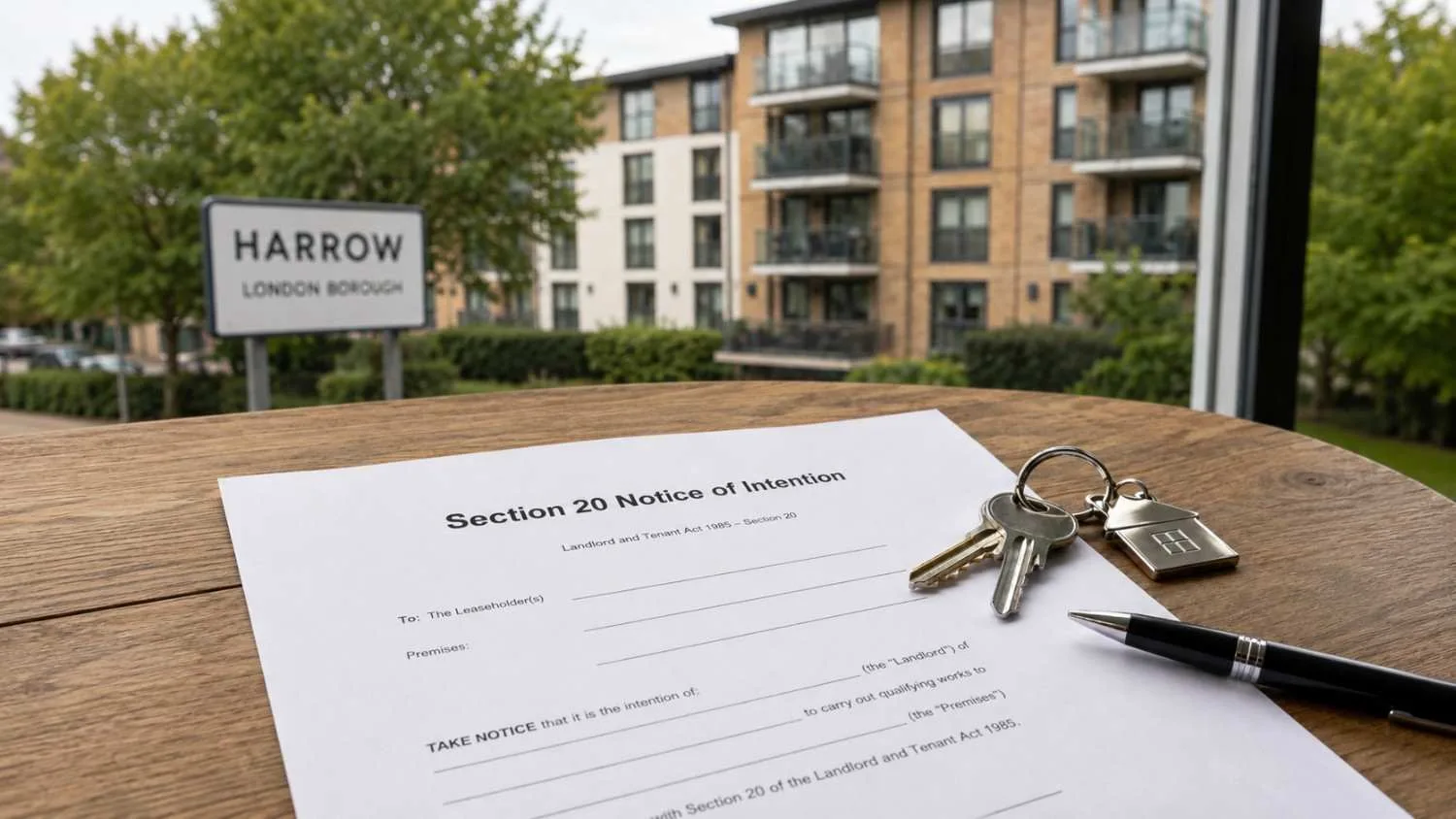
What Documents Should You Check Before Buying a Harrow Flat? The Leasehold Pack Explained
A clear checklist of lease, service-charge, insurance and Section 20 documents every buyer should request before offering on a Harrow leasehold flat.

Before you exchange on a leasehold flat in Harrow, you should request and review the leasehold information pack, which typically includes the lease, title documents, service charge accounts, Section 20 notices, building insurance certificate, and fire safety reports. Missing or outdated documents can signal hidden costs or legal risks.
Picture this: you have just had an offer accepted on a two-bedroom flat near Harrow-on-the-Hill station. The estate agent sends a short email that says, "Please ask your solicitor to request the leasehold pack." You have never heard that phrase before, and nobody has explained what it actually contains. This is one of the most common moments of confusion for leasehold buyers, and it is exactly where this guide can help.
Unlike buying a freehold house, a leasehold flat purchase depends heavily on paperwork. The documents to check before buying a leasehold flat reveal who owns the building, how much you may pay each year, whether major repairs are planned, and whether the property is mortgageable at all. Skipping this step, or accepting an incomplete pack, is one of the most frequent causes of delayed or collapsed leasehold purchases in Harrow.
As a letting agent in Harrow working with buyers across HA1, HA2, and HA3, we regularly see deals stall simply because documents were requested too late. This guide walks through exactly what to ask for, why each document matters, and when it may be sensible to pause or walk away.
What Is a Leasehold Information Pack?
A leasehold information pack, sometimes called a management pack or LPE1 pack, is a bundle of documents the seller's solicitor requests from the freeholder or managing agent once a sale is agreed. It typically includes lease details, service charge accounts, insurance information, and any outstanding notices affecting the building.
In most cases, the seller pays a fee for this pack, which can take several weeks to arrive, especially where the freeholder or managing agent is slow to respond. Buyers who understand what should be inside the pack are better placed to spot gaps early, rather than discovering a missing document right before exchange.
Which Documents Must You Check Before Buying a Harrow Flat?
While every flat is different, the documents to check before buying a leasehold flat generally fall into five categories:
- The lease itself and any deed of variation
- Title documents from HM Land Registry
- Service charge accounts and budgets, usually covering the last three years
- Notices under Section 20 of the Landlord and Tenant Act 1985, where major works are planned or completed
- Building insurance certificate and, for taller blocks, fire safety or EWS1 documentation
It can help to treat this as a checklist rather than a formality. A buyer who reviews each item properly is in a stronger position to negotiate price, request repairs, or ask the seller to resolve an issue before completion.
What Should the Lease and Title Documents Reveal?
The lease sets out how many years remain, what ground rent applies, and what the leaseholder is responsible for maintaining. It may also include restrictions, such as rules on subletting, pets, or alterations, which can affect how you use the flat.
Our Harrow leasehold buyer checklist explains this process step by step, while our short lease guide looks specifically at what happens when fewer than 90 years remain. If ground rent terms are unclear, our ground rent guide explains how review clauses work and why they matter to mortgage lenders.
The title register and title plan from HM Land Registry confirm legal ownership, boundaries, and any restrictive covenants. A solicitor should always check these documents against the lease to confirm they match.
Which Service-Charge Documents Should You Request?
Buyers should ask for at least three years of service charge accounts, along with the current year's budget. These documents show whether charges have been rising, whether a reserve fund exists, and whether previous bills were paid on time by the seller.
Large or sudden increases are not automatically a red flag, but they are worth questioning. Our service charge disputes guide explains how leaseholders can challenge unreasonable charges, which may be useful background reading if the figures look unusually high for a Harrow flat of similar size.
What Major Works and Section 20 Documents Matter?
If the building has had or is planning major works, such as roof repairs or lift replacement, leaseholders should have received a Section 20 notice. Buyers should ask whether any notices have been issued in the last two years and whether costs have already been billed or are still estimated.
If you're buying a Harrow flat and have already seen a Section 20 notice, read our guide on buying a flat with a Section 20 notice in Harrow before you make an offer. This is particularly relevant for ex-council blocks, where major works can sometimes be larger in scale. Our ex-council flat guide covers this in more detail.
What Insurance, Fire Safety, and Building Documents Should You Check?
The building's insurance certificate confirms the policy is current and shows the sum insured, which should reflect rebuild cost rather than market value. Buyers should also ask whether the certificate names the correct freeholder and whether it is due for renewal soon.
For blocks over 11 meters or with cladding concerns, buyers may also want to request fire risk assessments or EWS1 forms where applicable. A mortgage lender may ask for this evidence before approving a loan, so it is worth raising it with your solicitor or broker early rather than close to exchange.
What Questions Should You Ask the Managing Agent?
Beyond the written documents, it can help to ask the managing agent directly about any planned works not yet formalized in a Section 20 notice, any disputes between leaseholders and the freeholder, and whether the reserve fund is considered adequate for the building's age. Managing agents are not always required to answer every question in writing, but most reasonable requests are met in practice.
When Should You Walk Away From a Harrow Leasehold Flat?
In some cases, it may be sensible to pause or reconsider an offer. This can include situations where the managing agent refuses to provide basic documents, where service charge arrears appear unexplained, where a Section 20 notice suggests costs well beyond what has been disclosed, or where the freeholder cannot be clearly identified. None of these issues are automatically deal-breakers, but they usually call for professional advice before proceeding.
A solicitor experienced in leasehold conveyancing, alongside a letting agency in Harrow familiar with local blocks, can often help buyers judge whether an issue is minor or significant.
Citations and Sources
- GOV.UK – Leasehold property guidance: https://www.gov.uk/leasehold-property
- GOV.UK – Landlord and Tenant Act 1985, Section 20 consultation: https://www.gov.uk/government/publications/section-20-leaseholder-consultation
- LEASE (Leasehold Advisory Service) – Buying a leasehold flat: https://www.lease-advice.org/
- HM Land Registry – Title register and title plan guidance: https://www.gov.uk/government/organisations/land-registry
- RICS – Guidance on leasehold surveys and valuations: https://www.rics.org/